If you’ve lived in South Florida for any length of time, you know the neighborhood has some wild characters: iguanas dropping from cold-weather trees, alligators occasionally holding up traffic, and humidity thick enough to slice with a knife. But there’s another Florida oddity you probably never noticed: orchid seeds drifting through the air, sometimes in clouds of dust-fine particles.
If you’ve lived in South Florida since the 1980s or 1990s—or even lived here for a while during those decades—could you have breathed in orchid seeds on your way to the mailbox or beneath an oak tree? Absolutely possible. Back then, many neighborhoods were less built up, with more undeveloped land and natural habitat nearby. That doesn’t prove you inhaled orchid seeds, but it makes their almost invisible journey through the air all the more fascinating. And no, you don’t need to Google how to remove a botanical garden from your left lung.
The “Dust” in the Wind
An avocado drops a pit. A sunflower drops a seed you can actually hold. An orchid? It goes for something closer to a disappearing act. When a ripe capsule splits, thousands to hundreds of thousands of minute seeds—and, in some species, far more—can catch the breeze. Under the right conditions, the release resembles a puff of dust. You might never notice it happening over your head.
Unlike many familiar garden seeds, orchid seeds are typically minute and lack a substantial food reserve called endosperm. They consist mainly of a tiny embryo within a delicate seed coat. Their low mass and structure help them travel on air currents, sometimes beyond the tree or patch of habitat where their parent grew.
South Florida: An Orchid Powder Keg?
South Florida once had far more wild orchids in its tropical hammocks and wet forests, and native orchids still survive in the region today. Projects such as Fairchild Tropical Botanic Garden’s Million Orchid Project have also helped bring native orchids back to urban landscapes. So yes, you could encounter their airborne seeds while going about your day. But “everyone has inhaled millions” makes a better movie trailer than a scientific claim: there are no measurements establishing that for individual residents. How many seeds travel past you depends on the orchid, the season, wind, and how close you are to a releasing capsule.
So, Are My Lungs a Greenhouse Now?
No. Your lungs are not becoming a greenhouse, and you are not about to bloom at the grocery store. Orchid seeds cannot grow inside human lungs: the conditions and biological partnerships they need simply are not there. A brief incidental exposure is unlikely to cause problems for most healthy people. However, concentrated airborne organic dust can irritate the nose, throat, or airways, especially in sensitive people or those with allergies or respiratory conditions. The published evidence specifically measuring inhalation risks from orchid seed dust is limited.
If you are handling a mature seed capsule or working with dried plant material, avoid deliberately breathing in a visible cloud. Handle the seeds gently and use appropriate dust protection for substantial exposure. Persistent coughing, wheezing, or breathing trouble deserves medical advice rather than assuming that the seeds are harmless.
Why Your Yard Isn’t Automatically an Orchid Nursery
A seed that travels through the air still faces an extraordinary challenge: germination. Many orchids need a suitable fungal partner to help provide nutrients for the young seedling. Moisture, bark or soil conditions, habitat stability, and species-specific ecological relationships also affect whether a seed establishes. A seed landing on a random tree does not automatically become an orchid.
Pembroke Pines, Cape Coral, and the Orchids South Florida Lost
Here’s the twist: just because a seed lands in your yard doesn’t mean you’re about to grow a wild orchid. A sunny, closely manicured Pembroke Pines yard might offer few of the protected surfaces, moisture levels, and fungal partners a seedling needs. A shady Cape Coral property with mature trees might provide a better landing place—but Cape Coral has no magical orchid advantage. A well-treed Pembroke Pines yard could be far more suitable than an exposed Cape Coral lawn. The microhabitat matters more than the mailing address.
That’s especially poignant along South Florida’s east coast. Native orchids once flourished across landscapes that included tropical hardwood hammocks and swamp forests. In Broward County and beyond, decades of collecting, development, and habitat fragmentation reduced their populations and the places new plants could establish. A seed can still ride the wind across a neighborhood where its ancestors once thrived, yet find nowhere suitable to begin life.
That’s why conservation isn’t just about sending more seeds into the breeze. It is also about keeping the habitat, trees, moisture, and ecological partners that allow an orchid to turn from a speck into a flower. UF/IFAS explains Florida’s native orchids, while Fairchild’s Million Orchid Project shows what carefully planned restoration can accomplish.
Three Florida Orchids Worth Looking Up For
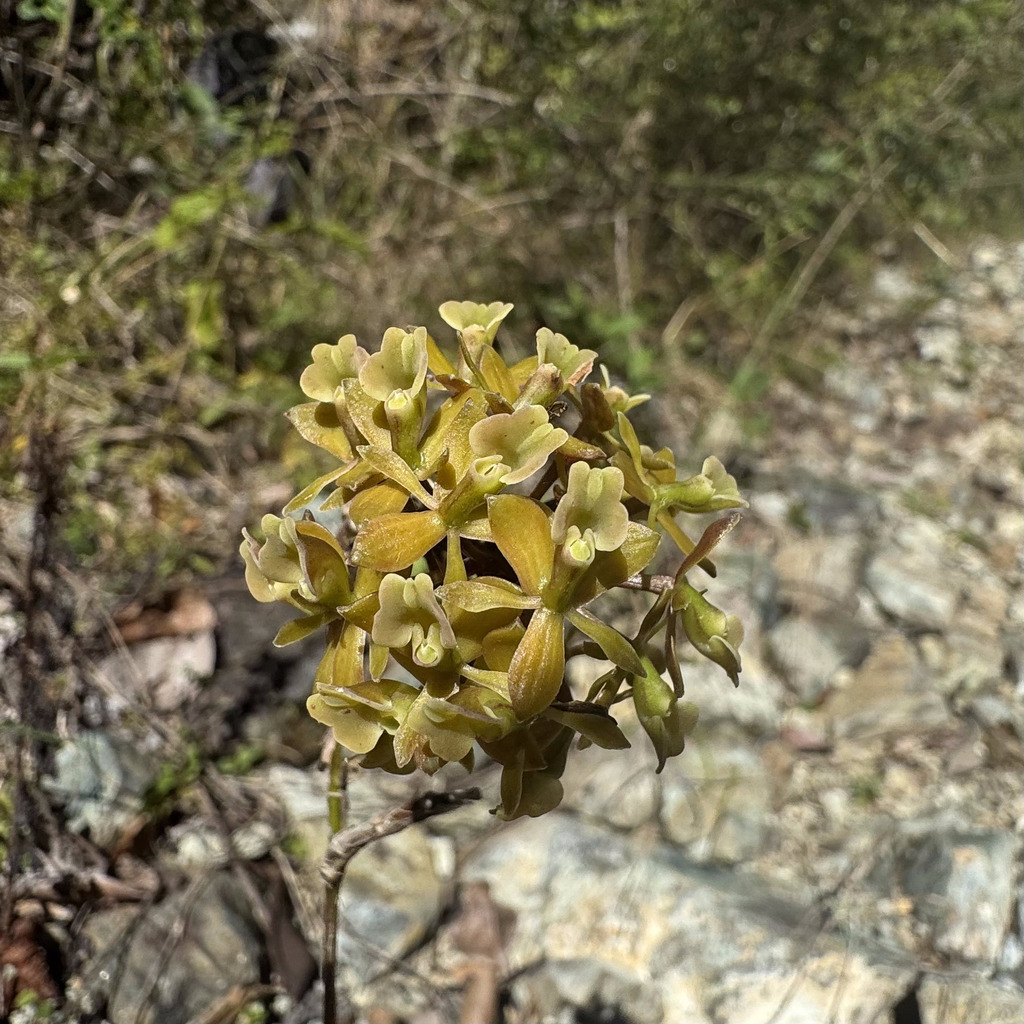
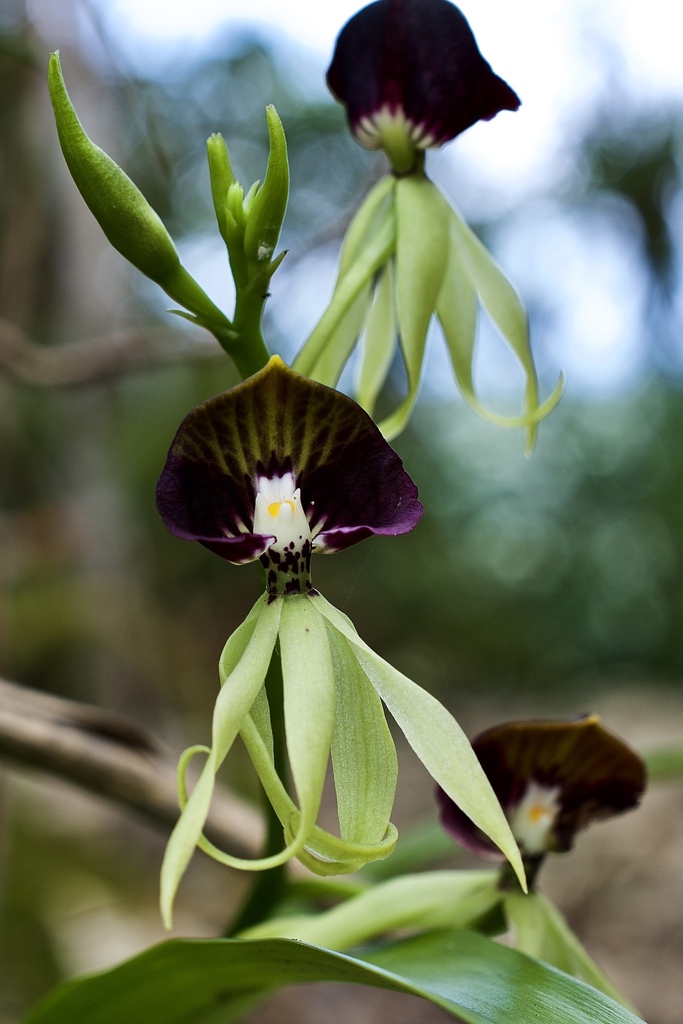
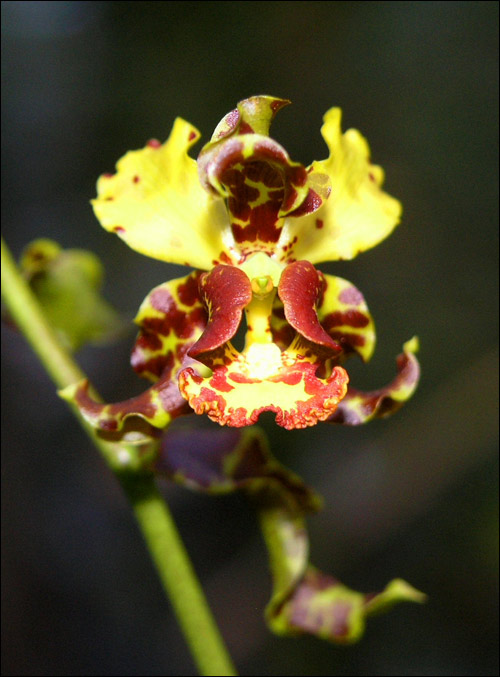
The dingy-flowered star orchid (Epidendrum amphistomum), the clamshell orchid (Prosthechea cochleata), and the cowhorn/cigar orchid (Cyrtopodium punctatum) reveal the remarkable variety of orchid forms. All rely on successful reproduction and suitable habitats, and their wind-dispersed seeds do not eliminate the importance of the ecological partnerships needed for establishment.
The three flowering photographs in this article document the adult plants, not the microscopic seeds. They offer a glimpse of what a barely visible seed may eventually become under the right conditions.
The Ultimate Florida Rite of Passage?
The next time you notice an orchid clinging to a tree, give it a little nod. That beautiful bloom began as something small enough to drift through the air—and it needed a remarkable chain of good luck to survive. Maybe a seed once floated past your nose on the way to get the mail. We may never know. But the real Florida magic is that a dust-sized beginning can turn into a flower.
Why Florida Seed Bank Cares About Something Almost Invisible
Seed dispersal is only the beginning of conservation. For threatened native orchids, protecting existing habitats, preserving genetic diversity, documenting provenance, and working with qualified propagation and restoration partners can be as important as collecting seeds. Orchid seed banking is specialized: storage and germination approaches must account for each species’ biology and, where necessary, its fungal relationships.
Florida’s native orchids should be appreciated where they grow. Do not collect wild orchids or their seeds without the necessary landowner authorization and applicable permissions or permits. Learn how Florida Seed Bank approaches seed preservation and why the future of a plant can depend on an almost invisible beginning.